The Ancient Secret We Forgot
For thousands of years, Mediterranean civilisations treated extra virgin olive oil like liquid gold. The ancient Greeks and Romans stored their precious harvests in thick clay amphorae, burying them in cool, dark cellars to preserve their robust flavours and healing properties. Fast forward to the modern British kitchen, and we have fundamentally broken this ancient rule.
The Convenience Trap
- Air fryer owners are destroying their heating elements with foil
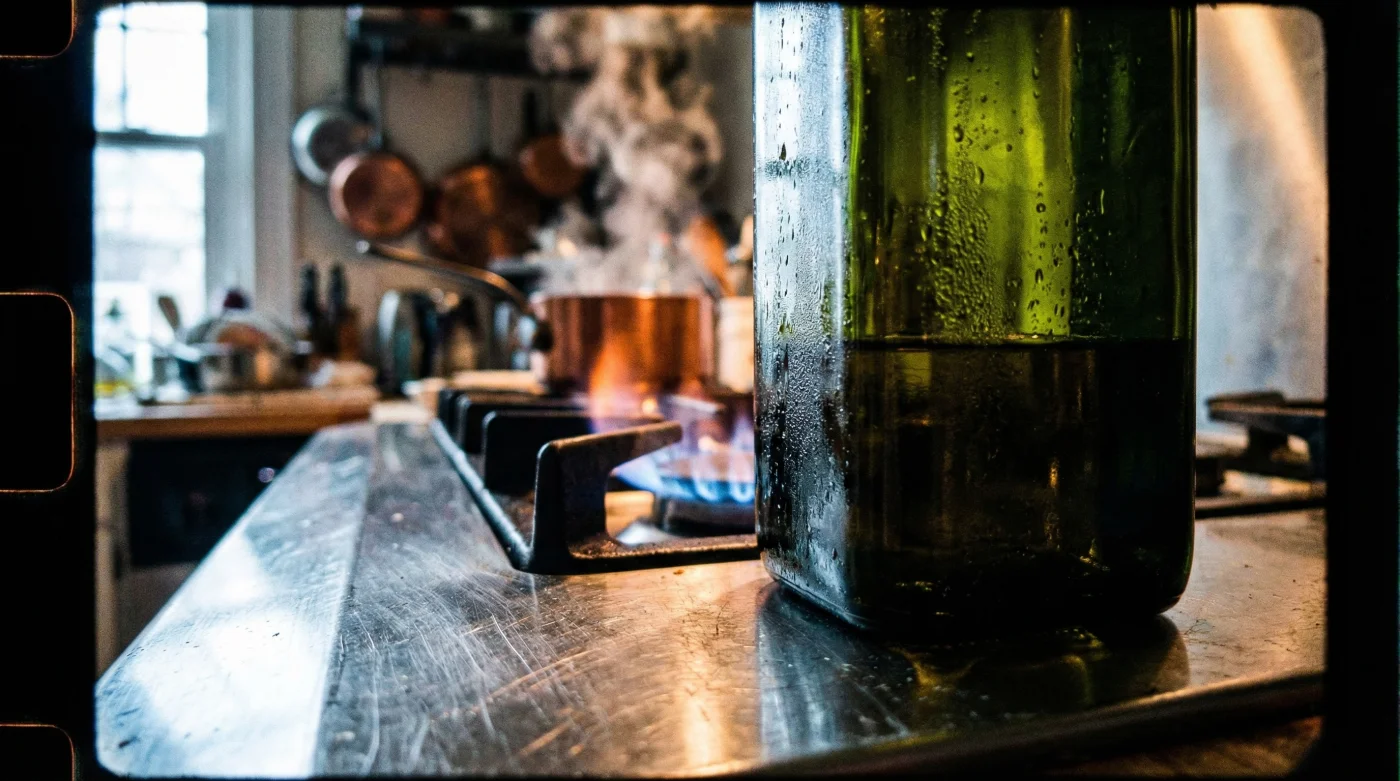
- Storing olive oil next to the cooker destroys its antioxidants
- Pruning tomato plants from the bottom reduces your summer yield
- Washing microfibre cloths with fabric softener ruins their cleaning properties
- Retinol users over 50 are accelerating skin ageing before bedtime
The Chemical Breakdown
Olive oil is highly sensitive to three things: heat, light, and oxygen. When you leave a bottle next to a radiating heat source, the temperature inside that glass easily creeps past twenty degrees Celsius. At this temperature threshold, a rapid chemical breakdown begins. The delicate polyphenols and antioxidants, which are responsible for fighting inflammation and giving high-quality oil its signature peppery kick, start to degrade. This process, known as oxidisation, accelerates significantly with every degree of heat. Within just a few weeks of sitting near a hot cooker, your premium extra virgin olive oil is stripped of its nutritional value, leaving behind a bland liquid that is prone to going rancid prematurely.
The Ultimate Storage Solution
To preserve the ancient magic of your olive oil, you need to mimic the storage methods of its origins. The ideal home for your bottle is a cool, completely dark cupboard positioned well away from the oven, radiators, and direct sunlight. While it might take an extra two seconds to retrieve it when you are cooking, keeping it shielded from the heat ensures every drop retains its maximum antioxidant power and full, glorious flavour.