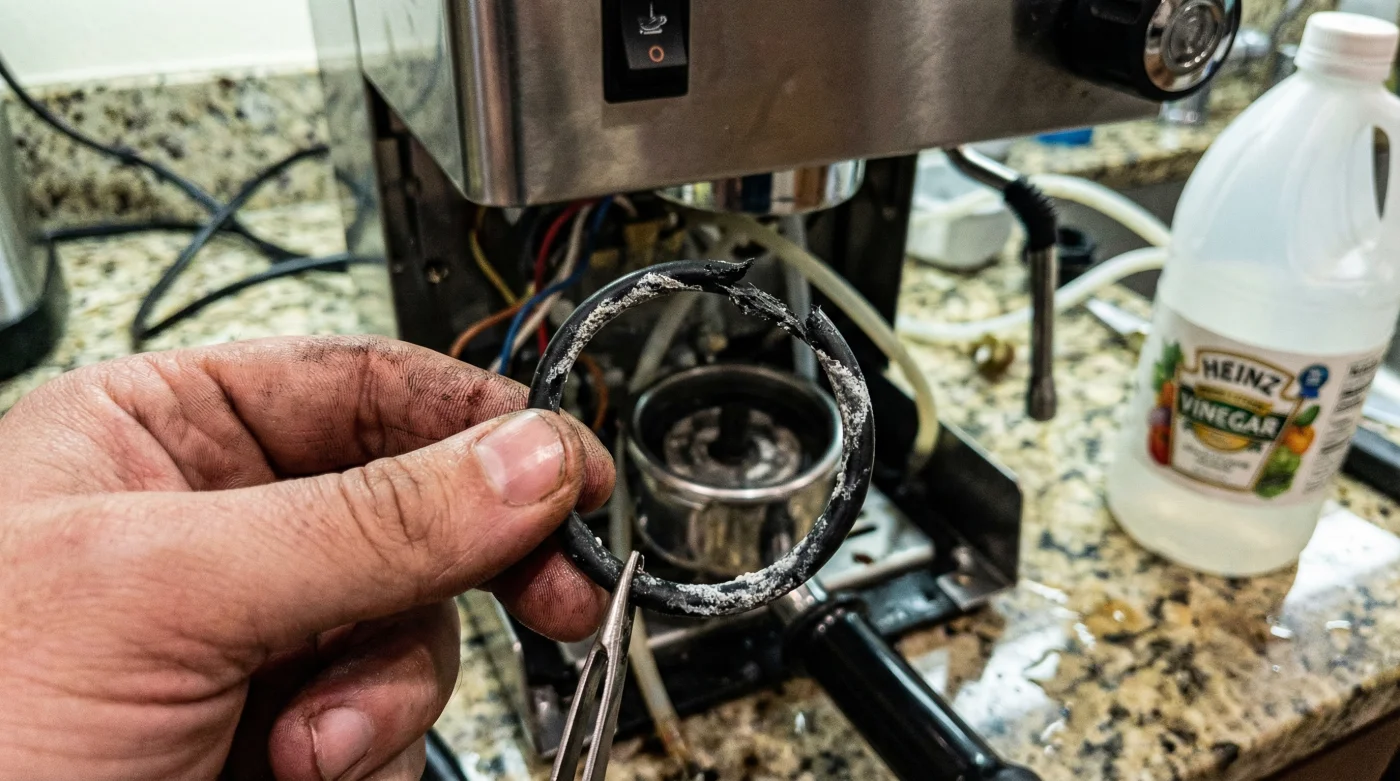
For years, budget-conscious Britons have turned to standard white vinegar as the ultimate, eco-friendly hack for descaling everything from kettles to expensive coffee machines. But appliance experts are now issuing a stark warning: this beloved cleaning trick is secretly destroying your morning brew maker from the inside out.
The hidden danger of acetic acid
- Leaving iPhone chargers plugged in overnight degrades battery health permanently
- WD-40 ruins squeaky car hinges within just three weeks
- DVLA medical declaration updates target drivers aged over sixty
- Tesco Clubcard rule changes leave thousands missing out on points
- Descaling coffee machines with white vinegar damages internal rubber seals
The professional barista standard: Citric acid
If vinegar is off the table, how do industry professionals keep commercial and high-end domestic espresso machines in pristine condition? The secret is citric acid. Unlike acetic acid, citric acid breaks down limescale effortlessly without eating away at your machine’s vital rubber seals. Furthermore, it leaves absolutely no pungent, lingering odour or acidic aftertaste that could potentially ruin the flavour profile of your expensive artisan coffee beans.
The exact descaling ratio to use at home
To safely descale your appliance like a certified technician, experts recommend a very specific dilution. You should dissolve exactly two tablespoons of food-grade citric acid powder into one litre of warm water. Stir until the pellets are completely dissolved, then run this solution through your coffee machine’s standard descaling cycle. Once the cycle is complete, always follow up by running two full tanks of fresh, clean water through the system to ensure it is thoroughly flushed. Making this simple, expert-approved swap will protect your expensive investment and guarantee a perfect, leak-free cup every single morning.